
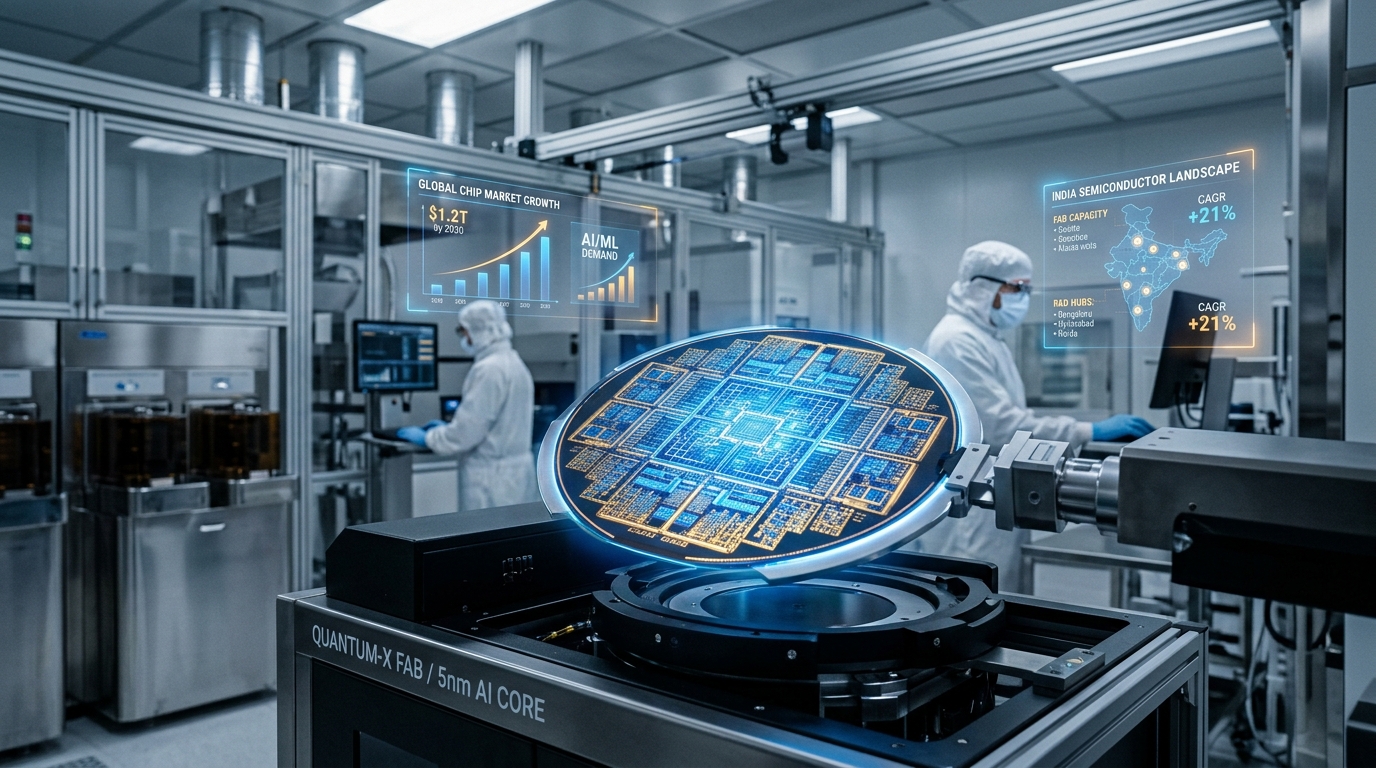
Samsung’s preliminary Q3 results and TSMC’s September sales data are out, and the numbers show how strong AI-driven demand has become.
Record-breaking quarter: what the data says
The latest semiconductor earnings benchmarks underscore unprecedented capital expenditure and high-margin fabrication utilization:
- Samsung Electronics: Preliminary Q3 operating profit of 107.4 trillion won, up 782.5% year on year, on revenue of 195 trillion won, up 126.6%. The operating margin hit a record 55.1%. It is the first time a South Korean company has crossed 100 trillion won in quarterly operating profit.
- TSMC: September revenue of NT$511.86 billion (about US$16.07 billion), up 54.6% from a year earlier. Revenue for January to September totaled NT$3,898.73 billion, up 41.1%.
- SK hynix: Its results are the next to watch for the memory-chip cycle and high-bandwidth memory (HBM) supply bottlenecks.
🇮🇳 Where India fits in: #SEMICON 2.0
India’s semiconductor journey is moving from its first phase of incentives into a deeper, more ambitious one. Under the India Semiconductor Mission (ISM), the first phase backed fabs, OSAT/ATMP units and design projects, and the first “Made in India” chips are now a reality.
With ISM 2.0, the strategic focus is widening across the entire ecosystem: equipment, specialty materials, chip design architectures, and advanced engineering talent.
Strategic Ecosystem Opportunities
That expansion unlocks decisive commercial opportunities across four key pillars:
- Suppliers of equipment, specialty chemicals, industrial gases, and advanced substrates
- OSAT, packaging and testing players scaling packaging nodes
- Design houses and fabless startups driving domestic IP creation
- Global multinational firms looking for a resilient “China+1” manufacturing base
Navigating Fragmentation & Intelligence Advantage
A fast-moving market also means a crowded and fragmented one. Knowing who the competitors are, who the right vetted suppliers are, and where the capability gaps sit will decide who captures sustainable market share.
At KEPLER Ventures, we help businesses map competitors across organized and fragmented markets through rigorous market research, competitor intelligence, and on-ground supply-chain intelligence.
Looking to enter the Indian semiconductor market or identify potential competitors, suppliers, and business opportunities? Let’s connect.